
Are you finding it difficult to stay focused with all of the run-of notifications, rapidly uploaded, bite-sized content, and scrolling that we encounter every day? Most people attempt to address this issue with apps to boost productivity, schedules, and strict routines. Although effective, it can become tedious and monotonous.
Games are generally viewed as a diversion. However, this is not exactly the case. Some of the games' main purpose is to train the peoples' mind and boost visual attention. What makes the difference is how games stimulate your brain. Some overwhelm you, others develop concentration in a moderated fashion.
Simple games with clear rules, short duration can be as brain training instead of being wasted time. They provide you with a structure for your brain to internalise. When used intentionally, these games naturally fit into short breaks and busy schedules.
Seven super simple games that will keep your focus sharp without sucking all your time and energy away:
1. Sudoku – Strengthens Logical Focus
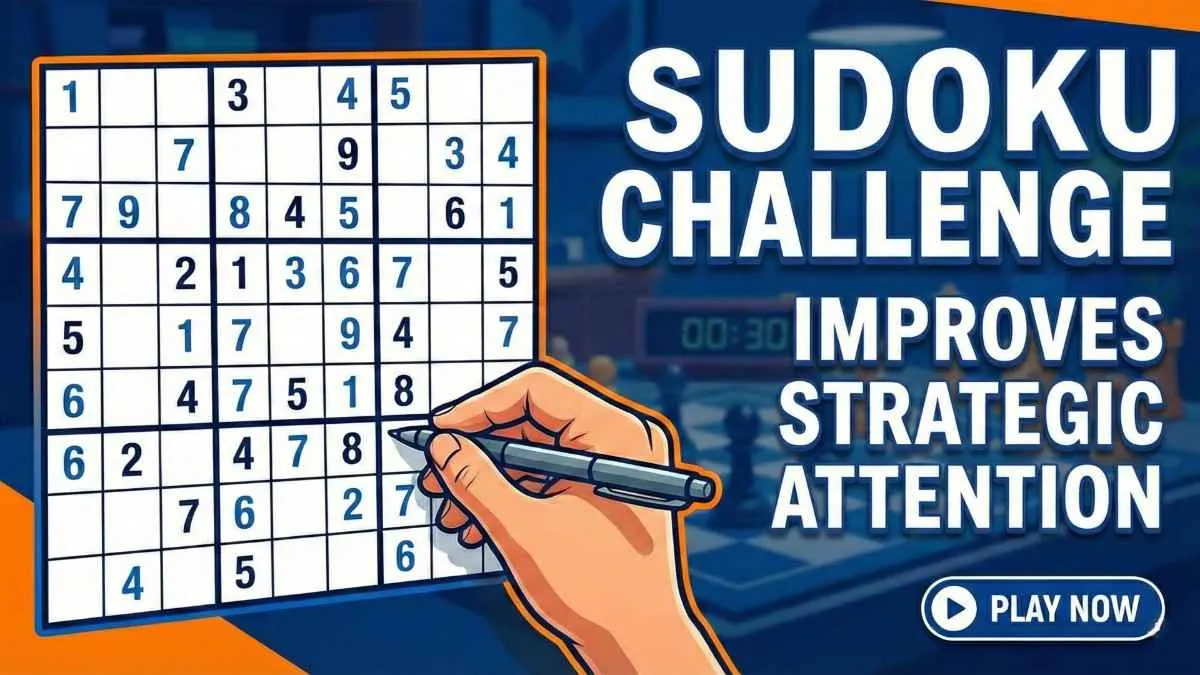
Sudoku is much more than a number game, it is a disciplined mental activity that trains your mind to stay focused in well-defined limits. The game offers a pre-structured set of problems that demand concentration and thought rather than an adrenaline rush.
By the time you are done with the Sudoku grid, you find yourself able to scan, analyze and eliminate possibilities and your mind is attuned to focusing away from distractions and anchoring on the physical task at hand.
The fact that Sudoku is played at a sluggish, contemplative pace is one of its major strengths. Without a timer rushing you, you will be able to focus more fully—without distraction.
The brain doesn't learn mechanics again and again, since rules are constant. Mental resources applied to thinking and page eight. Even 5-10 minutes is enough. A five- or ten-minute puzzle can quiet a noisy mind.
Persistence is another great trait that Sudoku can aid in improving. If you stick with the same task until you decide to stop, you may be building up your concentration span.
Sudoku improves focus because it:
- Training learners in logical and sequential thinking
- Fosters prolonged focus
- Is free of task time constraints and has no distracting materials
- Induces a tranquil, ordered Mental state
That's what makes this a perfect morning focus, warm-up, or study break. Or any time your mind feels fuzzy.
2. Chess Puzzles – Improves Strategic Attention
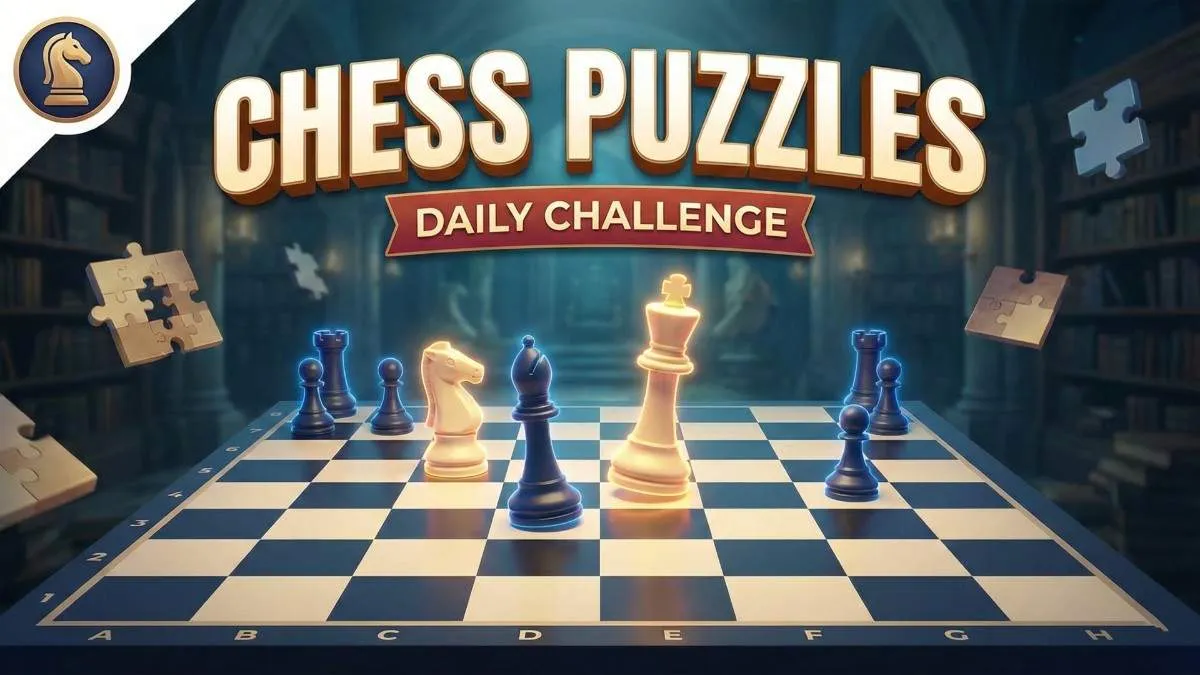
Chess puzzles have all the mental advantages of chess, but do not require the time commitment of a full game of chess. In a chess puzzle, a single situation is presented, for which a correct call must be made while considering all variables.
Chess puzzles, however, take away a lot of the time-consuming strategizing and emotional energy that goes into playing a full game, so you can put all your mental effort into this one particular problem.
Your focus is completely on the task, thinking about all the possible variations and the best move to make. You cannot be distracted or only half-focused. The short, self-contained nature of puzzles makes them great for focus training. You focus for a small amount of time, then suddenly disengage.
Playing to Win. Working on chess puzzles, you don't get discouraged even when you have set yourself a checkmate. You'll learn to breathe evenly and acquire the patience to not make a quick move. Eventually, you have constructed a mental strength that enables you to keep your focus when gathering a poem rather than working on a difficult genetics problem.
Chess puzzles boost focus because they:
- Demand full cognitive engagement
- Strategy-oriented and planning forward
- Nurture patience and self-control.
- Deliver short, high-quality challenges
Works well to keep you going in the middle of the day or when you don't want to sit down and play a game, but instead keep your mind sharp with some problem-solving.
3. Memory Matching Games – Enhances Short-Term Memory

Memory matching games seem so simple, but they actually involve a lot of concentration and tracking. You have to recall where, what symbol, shape or pattern the last thing you saw was.
While you are playing, your mind is constantly recalling and assessing short-term memories. This ongoing process of recall and cross-reference is strengthening your working memory at the same time as your concentration.
These types of games are made to eliminate any carelessness. If your concentration jumps sideways for only an instant, your pull will drop off—and that's how you learn effectively, as any magician will know.
Since most rounds are very brief, you can keep your eye on the prize without getting tired or sluggish. When your mind is clear but relaxed, you're at your best. The more you get used to it, the more you will improve your ability to hold information in working memory.
Playing the game removes 'mind clutter'. Your objective is narrowed down to one task that effectively blocks out all incoming information and lets you focus entirely on the task.
Memory matching games improve focus because they:
- Build your working and short-term memory
- Demand one-track supervision
- Mute away distraction painlessly
- Short and most effective sessions
Excellent for short-term psychological inputs in between work assignments—that moment when your brain is blank but needs a pick-me-up!
4. Word Puzzles – Sharpens Mental Precision
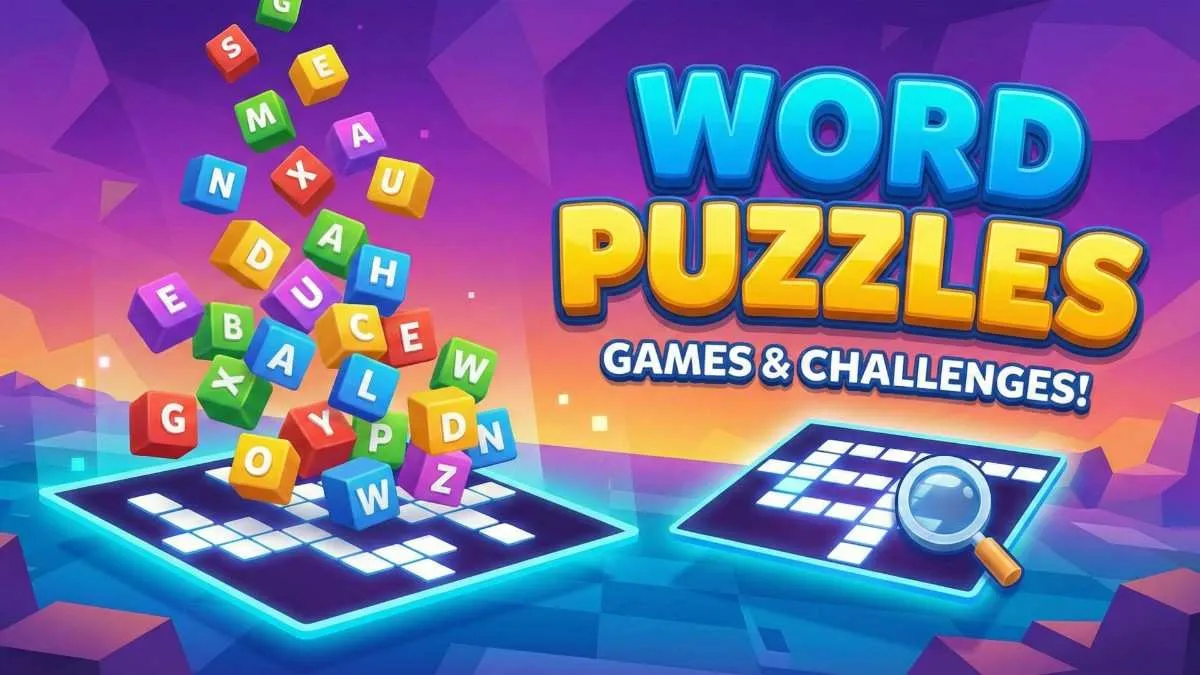
Word puzzles give your brain a workout as they tap into both language and meaning—and pattern recognition. Whether you're completing anagrams, crossword puzzles, or simply trying to outwit the clock with a quick vocabulary quiz, it all demands laser-sharp concentration.
Word puzzles are also another excellent example of two levels working in the brain. As they combine written language with reasoning, they give your brain the right amount of stimulation to stimulate it, but not too much to overstimulate it.
They are good if you want a little gentle mental stimulation but not too much pressure. It's quite relaxing and let it all into one, and the experience is intense rather than just diluted in the process.
It also gets you to slow down and really focus. Every single letter or pattern is important. It also causes you to try and think more hard. To keep it short. A 1 mins break can get clearer your mind and back to your concentration. By including the problems, you allow yourself to leave before the work is completed.
Word puzzles improve focus because they:
- Enhance verbal accuracy
- Train pattern recognition
- Keep attention detail-oriented
- Help to prevent cognitive overload
They are best used in the creative break, writing appointment, or winding down in the evening, when it is possible to focus without looking for urgency.
5. Simon-Style Pattern Games - Improve sustained attention
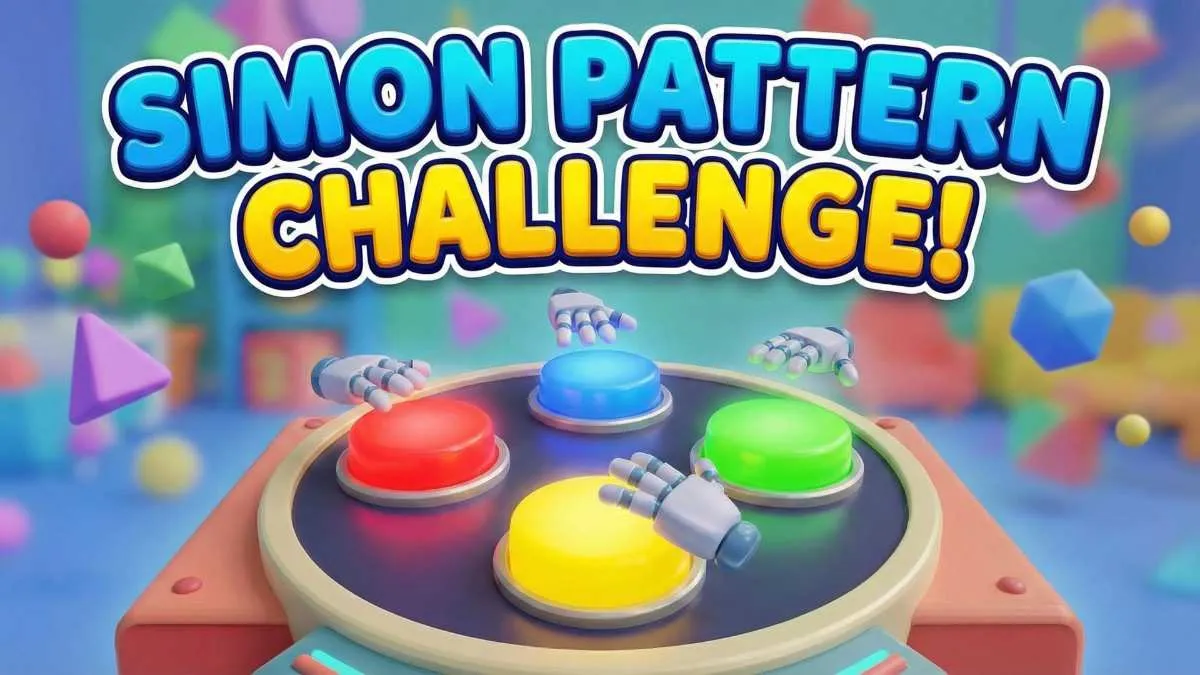
Pattern recognition games develop your memory, recognition ability, perception and re-production skills. They are based upon your ability to recognize and memorize visual sequences of a set length—and copy them in the same order. Each turn causes an increase in difficulty.
All require close concentration. One slip-up and the game is over the brilliant way to develop close attention to detail. The other great feature of longer sequences of pattern games is that your brain must be extremely alert for the entire duration, building high-endurance mental alertness.
As the pressure points are quite comfortable, you practice laser-like focus without agitation. Short rounds burn-in current focus and make sure it is kept in tip-top shape without burnout. Repeating the game brings just a little pressure.
Simon pattern games build focus because they:
- Use visual reminders & checklists to assist attention
- Encourage performance enhancement during demanding situations
- Absorb total focus
- Offer quick, effective Zen sessions
For such activities, choose a distinct endpoint, provide tangible doing tasks, and give paced visual cues, all of which raise participation. These games are perfect for short power focus intervals when you need an instant focus impulse.
6. Jigsaw Puzzles (Digital or Physical) – Encourages Deep Focus
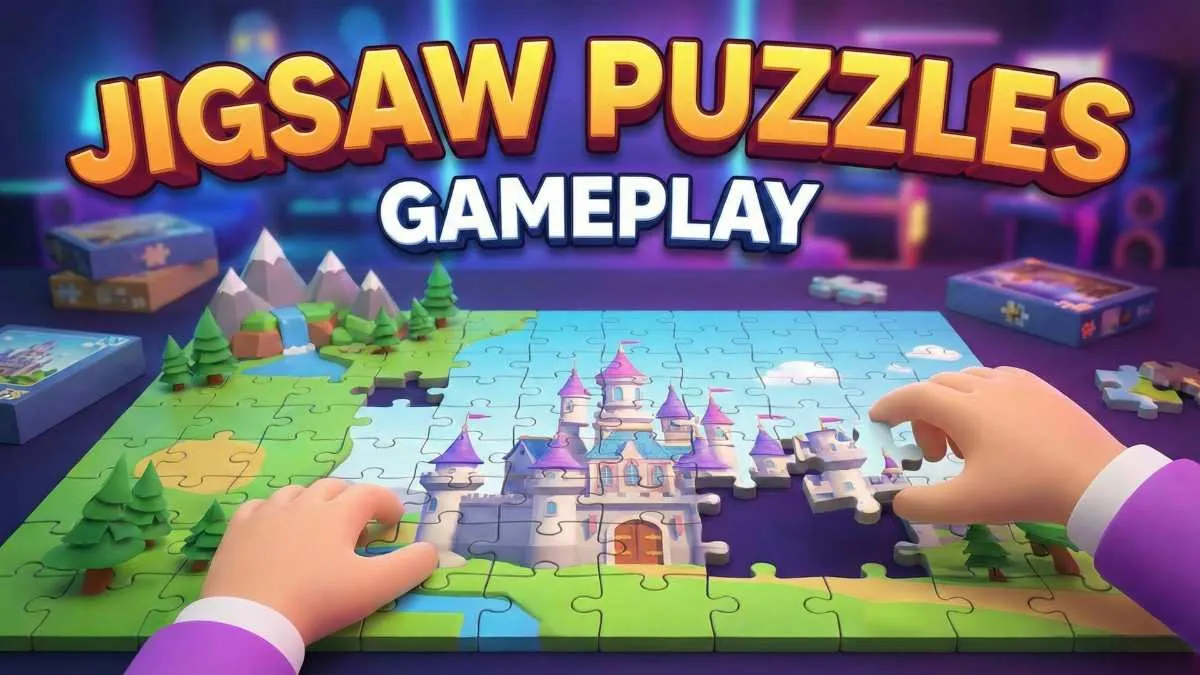
The type of attention specifically trained by doing jigsaw puzzles, digital or not, include: patience, looking, and being willing to give oneself a lot of time to do one task.
It is not that fast games add extra stress, but jigsaw puzzles ease the mind. You pause and examine shapes, colors, and patterns through observation and concentration.
This kind of involvement cuts down on mental chatter. The more focus you give to making the pieces fit, the more the other distractions tend to fade away. A jigsaw puzzle is a good problem-solving activity as it rewards perseverance but not speed as it is slow-and-steady work.
Even relatively simple digital puzzles can induce a deep focus state within minutes. It is not even necessary to complete the whole puzzle to experience the effect. Without stress or competition, this activity is quite revitalizing for the mind.
Jigsaw puzzles boost focus because they:
- Is capable of maintaining consistent, unbroken concentration
- Lighten your mental load and noise
- Improve visual-spatial perception
- Favor patience rather than speed
Great for comfortable concentration sessions, where you wish to train attention without feeling rushed or in a hurry.
7. Timed Logic Challenges – Boosts Decision-Making Speed

Timed Logic challenges are a fusion of concentration with a small sense of urgency. Given an easy problem, you have a fixed period in which to solve it accurately. It's not about working fast but about working clearly within a limited amount of time. This will enable you to keep a clear mind even when time is short.
The game's perfect decision-making by ranking what information is important so quickly. Distraction instantly impacts your performance. Since problems are short in duration, focus is intense yet fleeting. You totally immerse, then lose yourself gracefully.
Logical games also help you to trust in your thinking and avoid being paralyzed by analysis. This continuously trains you to sit down and concentrate on important deadlines.
Timed logic challenges improve focus because they:
- Train clarity under moderate pressure
- Put more emphasis on swift decision-making, etc
- Thoroughly attend to tasks for brief spans of time
- Keeping sessions short and under control
They are particularly good for training focus when you need to do deadline-heavy work with a short practice time.
How to Use Games Without Losing Productivity
The key to focus-improving games is the fact of playing them with a purpose, not playing on and on. Playing without limits may turn into a black hole of distraction, even for the most fascinating game. And what must be the limits? The first limit should be the time. The purpose of cheating is to allow short resets, not to hack your way out of individual responsibility. Types of games, later, should be chosen prudently. Focus games should be limited and simple in order to be manageable.
Avoid a game that constantly intrigues you with rewards, notifications, and ads distracting from your goal. Ensure that gaming breaks are not entertainment marathons but mental exercises. Once or twice should be enough. Concentrate on not the length of the game but on the frequency of playing. Shorter, more frequent times a day are the upper hand over longer, less frequent.
Methods to keep games productive:
- Keep the time between 5 and 15 minutes
- Choose games with a natural stop point
- Avoid addictive and competitive game mechanics
- Play games between tasks, not during deep work
If soundly used, games may be an effective trick to increase productivity.
Final Thoughts
Notice no implication that focus is achieved by listening harder. Conversely, it involves training yourself to stay in focus without tiring. They add discipline, direction, clarity, and a delicious, subtly felt stimulation. They intensify without depriving the music of its profundity and vitality.
Simple games are that way because they save your time. They play even over a small interval of break and are more suit-friendly. Through the selection of a warm-up or recreation, you maximize the duration of breaks.
They do not displace work or experience, they are in essence the support to keep us mind active and alive. Consciously spending even a few minutes playing can be enhanced and further spread to help develop clarity, focus, and control of the mind.
The key is 'balance" and "awareness'"—meaning that attention is more intense when any given level of stimulation is managed than when it is overwhelmed. If you'd like to maintain your concentration for an extended period before it runs out, then simple puzzles will probably be one of your most useful tools.