Mini Games vs Big Games: Which Is Better for Daily Refreshment?
Mini Games & Casual Play
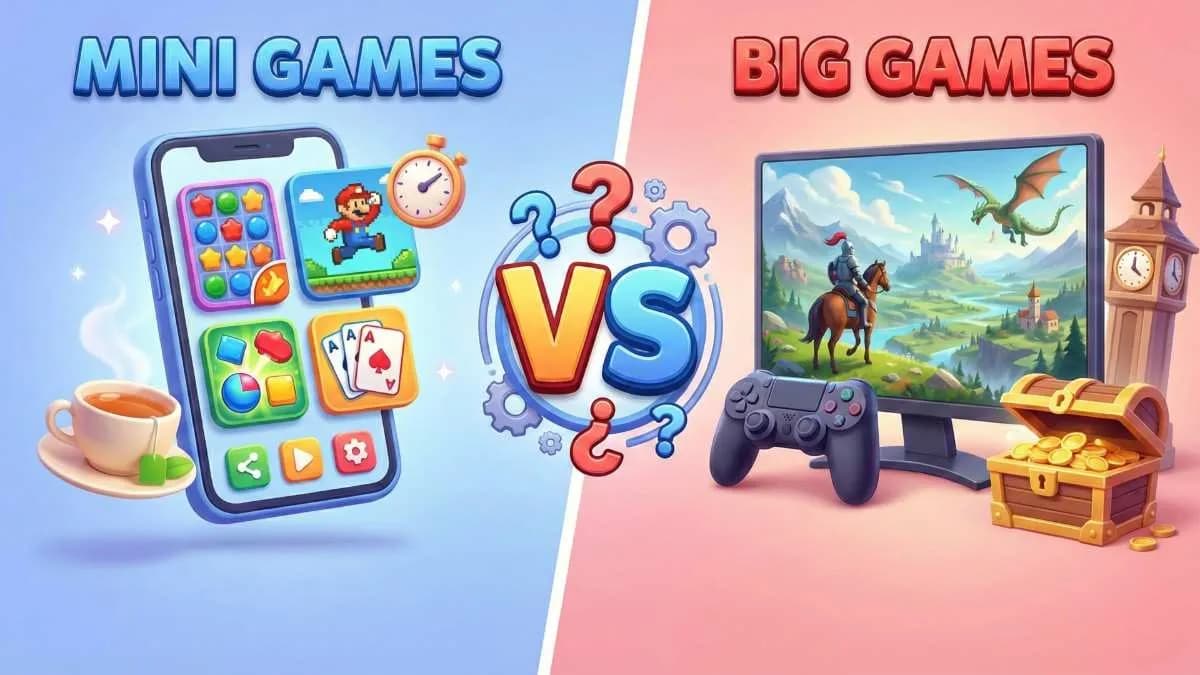
Games are no longer just entertainment in our digital lifestyle we have today, they are a quick getaway, a stress release, and for many a daily routine. Maybe your in between meetings and you just need a five minute break or your done playing and you just need to play for a little bit because you get bored or your just tired of everything and you just want to play a game to refresh your mind.
Post Details
(64 Views)
Hosted by
Jan 17, 2026

Kridaah Team
Nowadays, in life style of the digital world, games are no longer hobbies. It has become a habit of mind cleansing, mind escape, and mind balancing. People use games in entirely different ways—from five-minute refreshers between meetings, to hours-long gaming marathons after work. Some want a quick recharge; others require a full immersion.
Further spawns the question as to whether small games are more effective than larger duration games to refresh us every day (daily refreshment), or do large duration games also give a more profound and closer relaxation?
These two kinds of distraction are both very useful, yet very different states of mind and time commitment. Picking the wrong one at the wrong time can leave you more tired than refreshed.
Knowing how mini games and big games affect the brain allows you to make gaming a good habit and not a draining one. Daily refreshment. It's not how good a game is, it's how well a game fits within your life and how it personally applies to your mental energy levels.
In order to answer this question properly, we must first learn the difference between mini games and big games. Then we may be able to determine which one works better for mental refreshment on a daily basis.
What Are Mini Games?
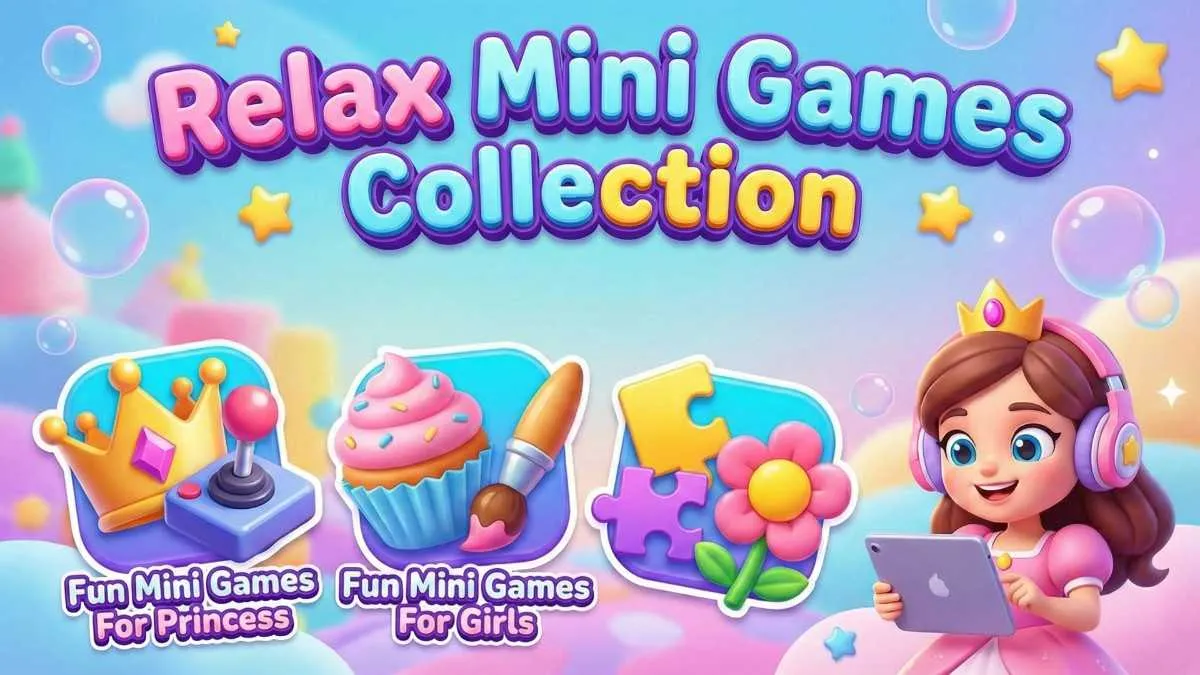
Mini games are quick and easy pieces of gameplay, meant to take a few moments and keep the player engaged but not have a lot of time invested. They are "built for instant engagement rather than long-term progression".
The rules of these games are very simple. You don't need any tutorial before you get it, it takes you few seconds to understand how to play.
Mini games are designed to allow for flexibility. If you enter a mini game you can leave it at any time without losing your award or leaving it incomplete. They tend not to get involved in serious plot lines and heavy emotional commitments. The idea is to keep it light.
The majority of mini-games are either played on the devices themselves or run from a web browser. Which means they are released and ready to go, whenever you want to play them. As sessions are quite short, mini-games are readily incorporated into the daily schedule. Idle times, breaks or short bits of spare time are used to get a quick sip.
Some specific examples are puzzle games, word games, endless runners, match-three games and arcade-lite games. In terms of strength, the greatest one of all is the convenience and mental lightness of wearing them, which makes them great for what they are aimed towards.
Mini games are made with short attention spans in mind. Since they are set up to be interrupted at any time, long-term investment isn't generally punished or lost. These games tend to work by repetition rather than escalation.
This is because they don't have to get more complex to get more difficult, in fact, they stay familiar, so the brain can settle in and relax to the experience. It is also emotionally safe in that it is not based on tension, stakes, drama, or pressure.
Mini game outcomes are fast and predictable, and closing the game is satisfying. This satisfied closure is so important for refreshing mind during a short break. Another advantage of mini games is that they are easy to play. Difficulty levels are not always high and they are intended to be accessible to anyone.
Most useful when cognitive fatigue is setting in. Different games provide fun even when thinking is getting a bit too much. Mini games will become something safe to come home to and comforting as the day progresses. It allows controlling the level of hassles throughout the day. For refreshment in everyday life, mini games tend to resemble mental breathing workouts rather than gaming marathons.
What Are Big Games?
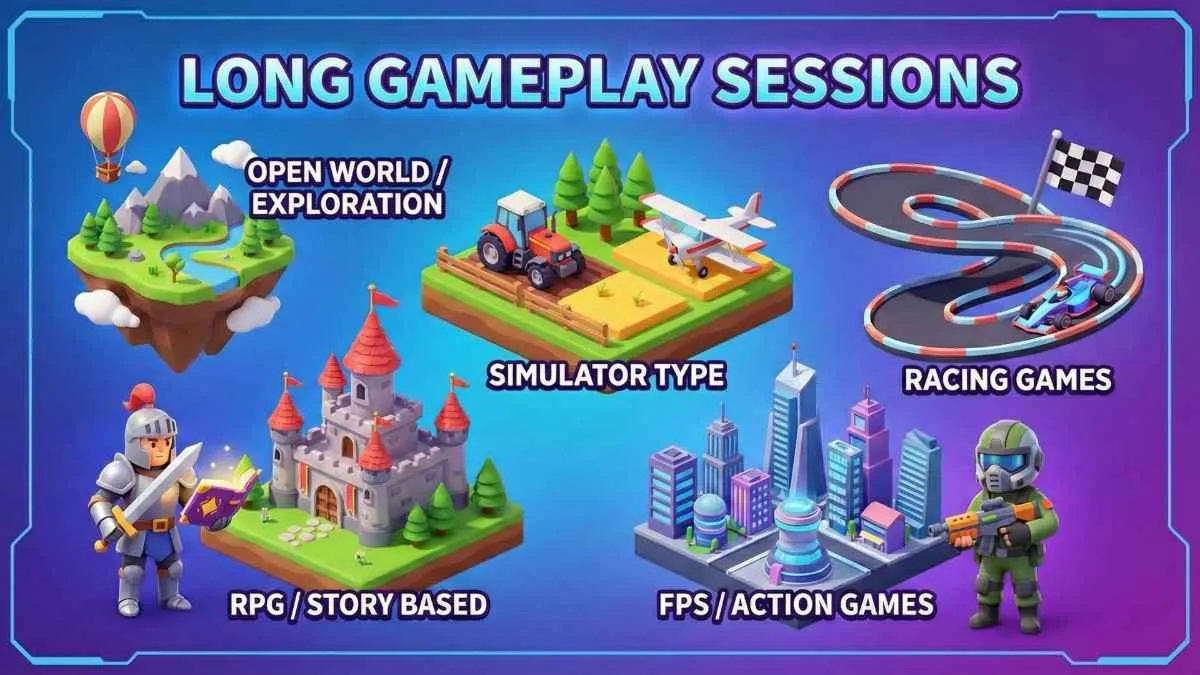
Big Games are immersive, long-term experiences. They are meant to be part of your life for a long time. They often have high-quality graphics, realistic environments, and complex gameplay. These take time and effort to learn.
Usually, large games are based around a good story or competition, which engages you emotionally as well as intellectually. Big games take just as much time as a mini game to think about pausing before you are halfway through. Pausing seems premature or disruptive.
They are often played on PC's or consoles, which allow for the concentration and flexibility not available during everyday life. Good games captivate you over long periods of time. Development, milestones, and plots grow over a long time.
An RPG, a standalone game, an MMO game, and a story-based game are examples. Successful Big games are great fun, but they can be tiring if you don't start them in the right frame of mind and at the right time of life.
Big games are meant to absorb you into another world. That's what you are there for, and in many cases, that can be the attraction of the game. They craft emotional trajectories similar to those of movies or novels. Gamers become emotionally involved with them, the game, its consequences, and their final development.
This emotional dimension also explains the need for mental availability during big matches. Performing them when tired or preoccupied can bring more fatigue to the player and lead to less enjoyment, it also promotes extended play lengths, sometimes through multi-layered goals, levels, or progression. This can have the side-effect of distraction from the time being spent.
Most rewarding when players are able to fully disconnect from their real-world lives. Evena portion of attention that is required can really break the flow, and cause annoyance. Big games activate many cognitive systems simultaneously? Memory, decision making, reaction time, and emotion regulation.
Mini Games for Daily Refreshment
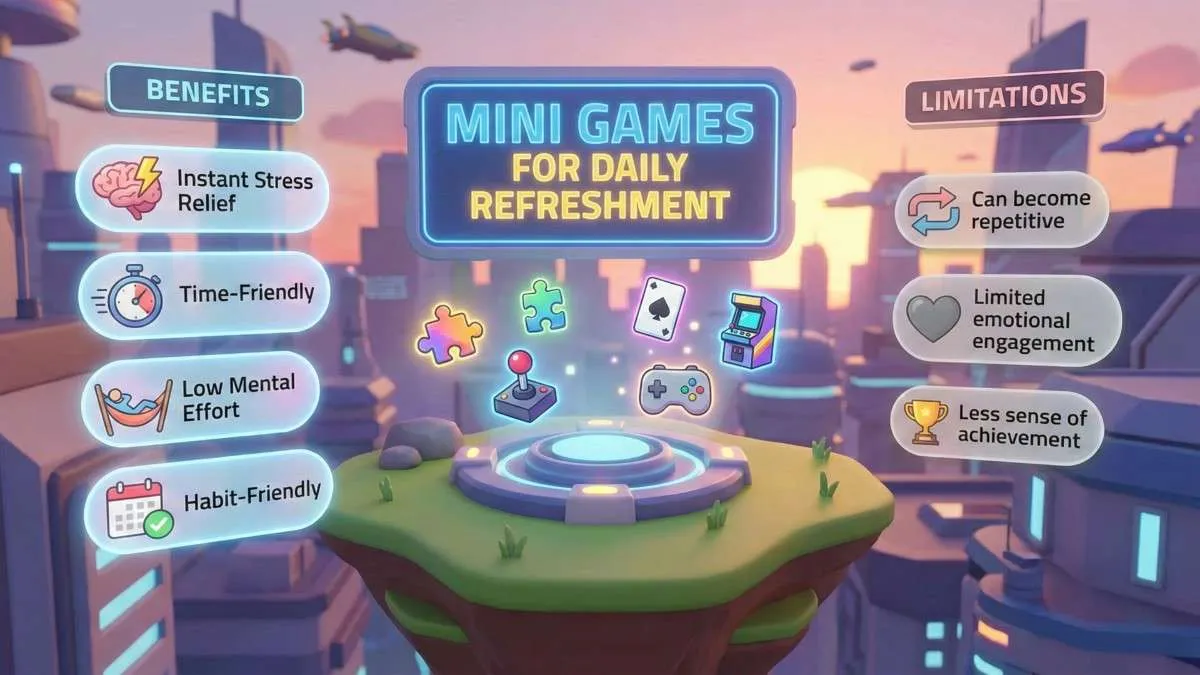
1. Instant Stress Relief
Mini games are a good way to include instant stress relief as they are rewarding by way of instant feedback and short goals. Finishing a small task or a level of a game quickly can give your brain a feeling of closure and cause stress and overthinking to stop almost immediately.
No emotion has been tensioned or impending, and so the release also leaves you lighter and more invigorated. You walk away more settled and open-minded rather than overtaxed all over in your mind.
2. Time-Friendly by Design
Mini games are made for quick factors, allowing them to be easily incorporated into active lifestyles. There is no planning to be done around them—short durations such as coffee breaks or waiting areas are sufficient.
This time, friendly quality also helps me avoid feelings of guilt and wasting time. I feel refreshed, and I haven't felt as if I have been unproductive, or that I have lost a part of my day.
3. Low Mental Effort
Following long study or work sessions, the brain is exhausted and overwhelmed by complicated processes and puzzles. Mini games eliminate the problems by not having many complicated processes or puzzles.
They are light on concentration demands, good for times of mental drain/decision fatigue.
4. Habit-Friendly and Non-Disruptive
Mini games are simple to switch off, so they are also better for everyday use, since they don’t drag you into long play sessions or get you stuck in a progression loop.
Eventually, this creates a healthy habit instead of a distraction, refreshing your mind without interrupting your sleep, focus, or schedule.
Big Games for Deep Relaxation
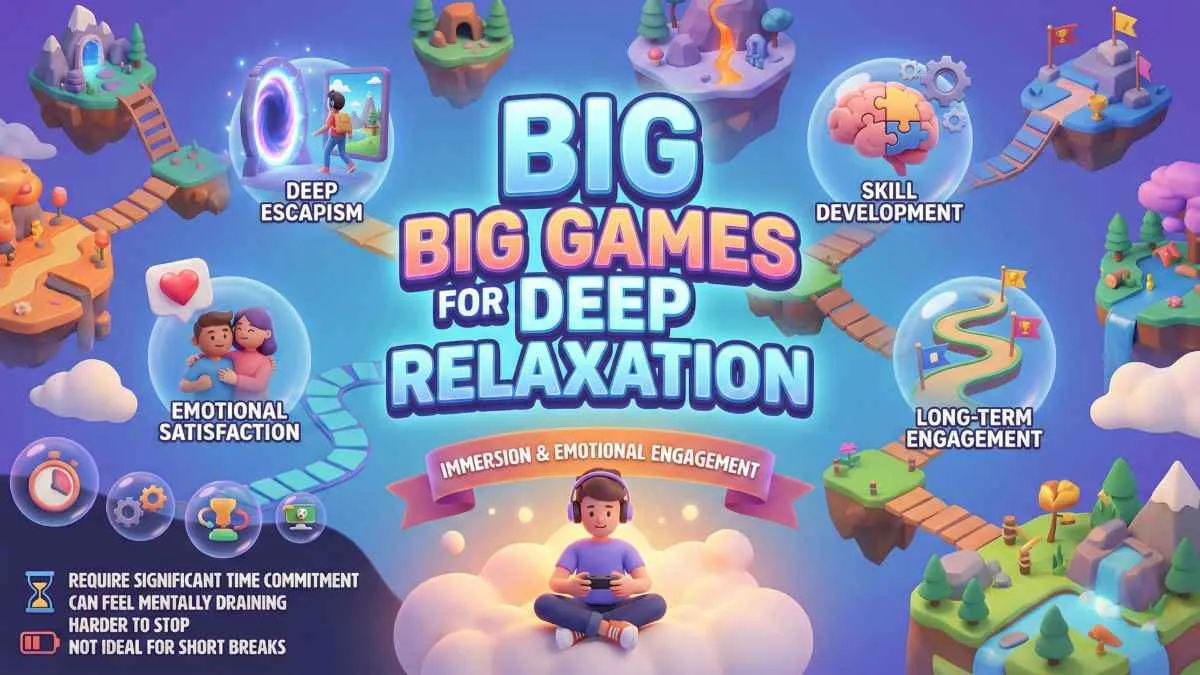
1. Deep Escapism
Big games are designed to capture players into a very detailed world, stories, and experiences. This extensive immersion would easily take the players away from real-world stress more than smaller games.
If you have hours without interruption, this form of escapism can be very relaxing—like a mental holiday.
2. Emotional Satisfaction
Story-driven, big games foster attachment to characters and story; accomplishments and progression are more satisfying because they are achieved over a period of time.
This richness in emotion makes relaxation truly feel more luxurious, but it does take extra mental and emotional energy to appreciate it.
3. Skill Development and Mastery
Long games often focus on expanding skills over time, strategy, and mastery. Improving in a learning system and performance provides a strong sense of achievement.
But this degree of engagement activates the brain rather than relaxes it, so big games are more suitable for anticipatory leisure than for afferent relaxation.
4. Long-Term Engagement
Big games are meant to be played across several weeks or even months, with mechanics that reward repeat play and competitive leaderboards. This allows for a sense of achievement but makes breaks more painful.
As a result, they can be most effective when you set aside dedicated time rather than relying on them during short everyday interruptions.
Which Is Better For Daily Refreshment?
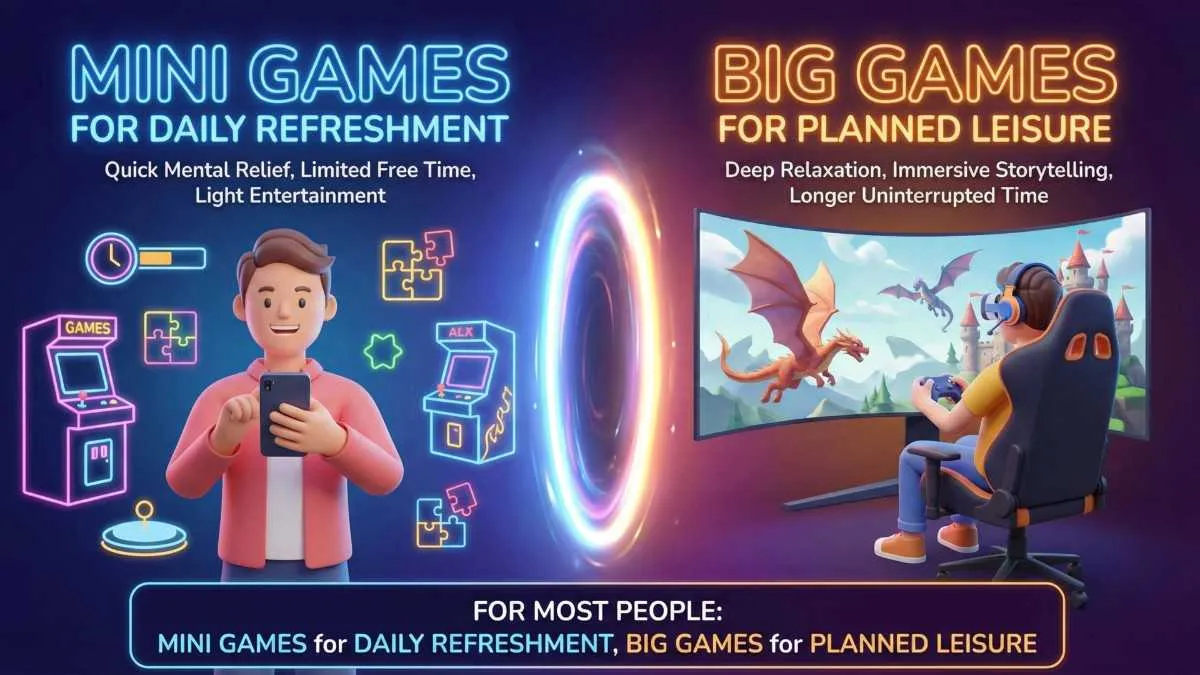
Daily refreshment is not about abandoning your life altogether, it is more about saying, ’’I’ve had enough brain energy today, but I think I can hold up a little more to keep functioning efficiently''. Mini-games are ideal candidates for partial refreshment, because they fit brief attentional periods rather than all-or-nothing conditions. They give you fresh ideas, interests, and minds, but don’t pull your heart out of your chest.
In contrast, larger games are likely to be more suited for a »big game« mindset: they dive you headlong into sophisticated systems, stories, and plays that call for prolonged attention and involvement. For refreshment in everyday life, this heightened state of attentiveness may not be too good—it doesn’t leave you feeling refreshed, but heavy and scattered after quitting.
Mini-games are more adept at respecting awake limits: you can play for 3 minutes, walk away smoothly, and return to your work without mental recklessness and irritation. Larger games are struggling more in this respect: once fully set into them, it can feel rude or incomplete to stop playing.
However, bigger games are not incapable of being calming, they just tend to be directed toward a different function. They are best for planned rests than everyday wards. If freshness depends on rapidity, lightness, and relaxation, mini-games win out.
The Balanced Approach: Best of Both Worlds
- No healthy gaming schedule requires you to pick one or the other. The best thing you can do is utilize all of the games' abilities.
- Mini games are perfectly used during short breaks, mental resets, and stress relief during the day. They help you be productive and at the same time take a fun break.
- The best days for big games are those you have time and headspace for. Evenings, weekends or scheduled leisure time were made for engrossing game sessions.
- Separating daily revitalization from deep relaxation will make you avoid burnout, relax your guilt, and keep a better relationship with your game.
Final Thoughts
Mini games and big games all have their place in modern life. It's not about choosing which is better generally; it's knowing when to use them. Mini games are the best to provide quick, repeatable refreshment without diverting the focus or illusion. The larger games provide a richer emotional and immersive experience, given the time available.
Gaming, when intended, may be a viable habit rather than a draining one. It invigorates not depletes and relaxes not intimidates. If you seek daily mental clarity, minigames are your friend. If you seek deep relaxation and enjoyment, however, the large games, by their nature, are your best bet.
By choosing wisely, your gaming will remain an enjoyable, refreshing distraction, just as it should be.
Related Articles
Best Free Casual Games for Office Breaks (No Login Needed)
Jan 20, 2026 · 12 min
Fun Mini Games That Don’t Distract You From Daily Work
Jan 20, 2026 · 10 min
Lightweight Online Games You Can Play on Any Device
Jan 20, 2026 · 18 min
Best Quick Brain Games to Refresh Your Mind in 5 Minutes
Jan 20, 2026 · 12 min
Simple Online Games to Beat Boredom Instantly
Jan 20, 2026 · 15 min
Why Kridaah Is the Best Place for Quick and Fun Mini Games
Jan 17, 2026 · 12 min